
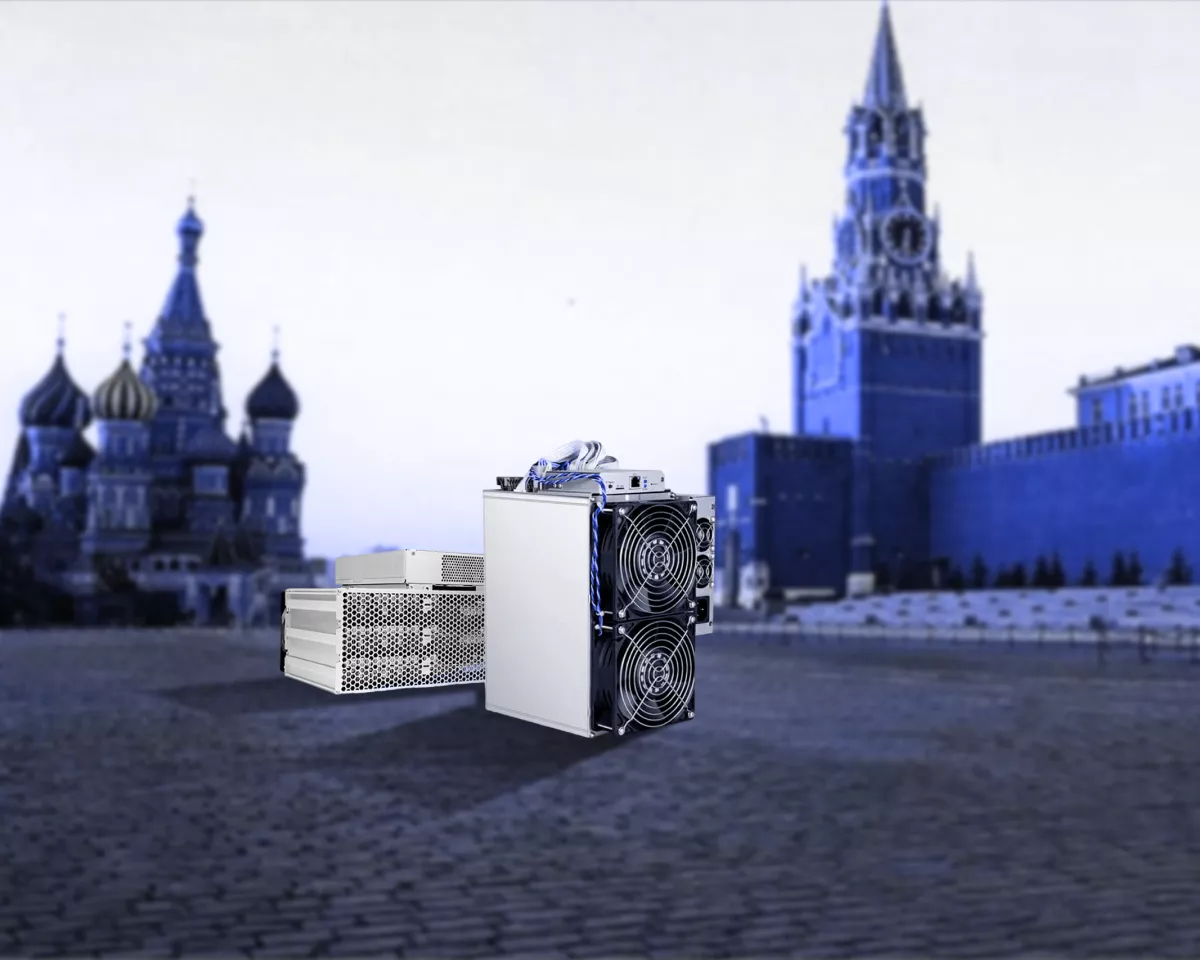
On July 30, the State Duma of the Russian Federation adopted in the second and third readings a bill on regulating the production of cryptocurrencies in the country. The document will enter into force on September 1.
ForkLog discussed with experts what standards it introduces and how it will affect miners.
What is included in the bill?
The bill defines the terms "mining", "mining pool", "mining infrastructure operator" and "organization of digital currency circulation".
Russian legal entities and individual entrepreneurs included in the relevant register will be able to engage in mining directly. Individuals will be allowed to mine cryptocurrencies without being included in the register, provided that the energy consumption limits set by the government are met.
A separate register of "mining infrastructure operators" will be within the competence of the Ministry of Finance.
The government, in coordination with the Central Bank of the Russian Federation, will determine the requirements for miners separately, and Roskomnadzor will be assigned to monitor their compliance.
It is not allowed to combine cryptocurrency mining activities with running a business or working in the electric power industry.
The bill obliges miners to report to the tax service with an indication of the address of crediting coins, and also gives the government the right to prohibit mining in certain regions.
Miners and pools must sell cryptocurrencies on their own behalf, at their own expense and in their own interests, as well as without using Russian infrastructure. In agreement with the Central Bank, the designated authorized body may unilaterally establish a ban or impose restrictions on transactions with digital currency.
The government has the right to set additional requirements for the mining pool.
Advertising of digital currencies, mining services, mining companies, crypto exchanges and crypto exchanges is prohibited. According to Deputy Anton Gorelkin, this will help protect citizens who are unaware of the risks of cryptocurrencies from fraud.
Penalties are not specified in the document.
What provisions were excluded from the draft law?
By the second reading, the controversial provision banning the organization of cryptocurrency turnover was removed from the bill. It assumed the impossibility of creating Russian exchanges and exchangers outside the experimental legal regimes.
Thus, along with the work of foreign trading platforms, a national exchange infrastructure may appear in the Russian Federation.
There was no support for the proposal to ban mining for individuals. The deputies considered the mechanisms available to power engineers sufficient to ensure effective control and suppression of the activities of gray and black miners.
The news agenda of recent days demonstrates that the Russian authorities have begun to consider cryptocurrencies "as a tool to circumvent sanctions and a point of high-tech export."
The Devil is in the details
The content of the Russian mining bill was received ambiguously by the relevant companies. On the one hand, the emergence of a regulatory framework will allow them to streamline the process, on the other hand, a number of provisions frighten businesses.
Mike Lvov, Director of PR and Communications at EMCD, pointed out in a ForkLog comment that the most controversial point for him is registration in registries and providing full reporting on cryptocurrency mining.
\"What will happen with this data is unclear. How and by whom will they be processed? How will this information be used? There are no clear answers to these questions yet," he explained.
Also, the mechanism for paying taxes and the currency in which they will be allowed to pay them remains unclear.
Concerns are raised about the government's empowerment to restrict mining in certain regions. Although Deputy Gorelkin claims that the authorities are not interested in shocks and the measure will be used "in exceptional cases."
Fedor Ivanov, Director of Analytics at SHARD, recalled the proposals repeatedly made by the Ministry of Finance to increase tariffs for miners. Along with them, the authorities discussed the introduction of fines.
"First, it is necessary for the proposed regulation to work, the industry to completely come out of the shadows, sort out taxation, perhaps get some preferences, and then we can discuss tariff increases. Simply increasing tariffs is an ill—conceived idea," Ivanov says.
He is convinced that pressure on large data centers will reduce the attractiveness of Russia for the crypto business, and the problem of apartment mining and illegal connection to networks will not be solved anyway.
Recall that the Russian Federation is one of the leaders in terms of the volume of cryptocurrencies mined, and the revenue of the largest companies exceeds billions of rubles. According to BitRiver estimates, in 2023, the country ranked second in the world in terms of computing power used in mining, second only to the United States in this parameter.